Before the Grand Vistas: How 19th-Century Painters Found America’s Identity in the Finger Lakes
Rethinking the American Canvas in Central New York
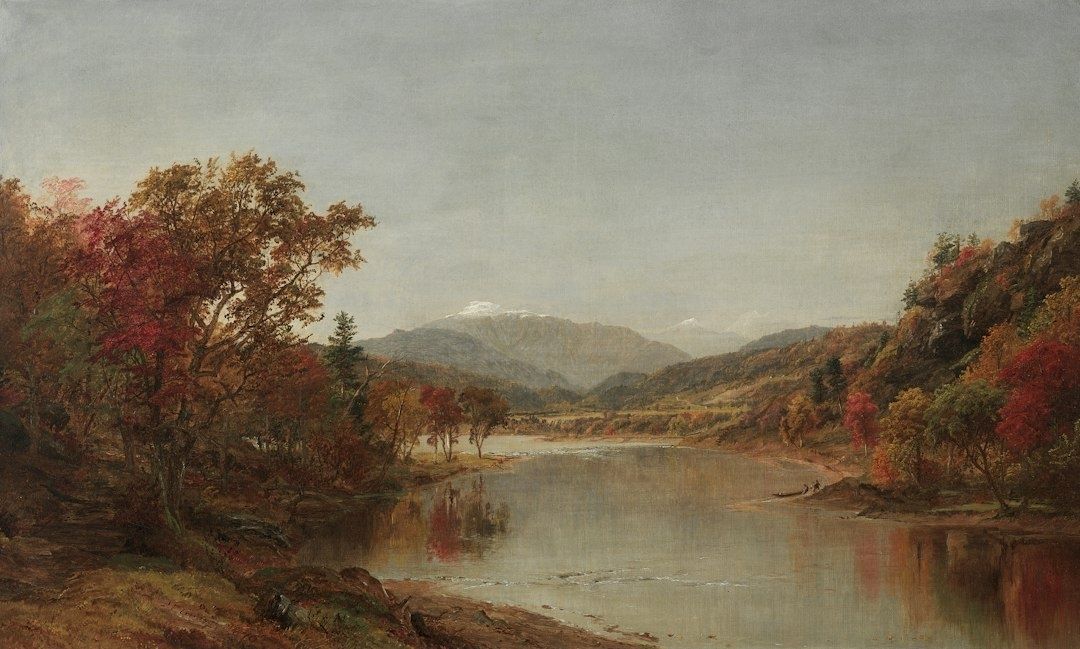
American landscape painting is often introduced through the dramatic vocabulary of the Hudson River School: Frederic Church confronting distant mountains, luminous skies opening over wilderness, and scenery presented as both spectacle and national promise. Yet another American visual identity developed farther west, among the deep lakes, rounded drumlins, cultivated slopes, and compact villages of central New York. The Finger Lakes offered less theatrical terrain, but its quiet complexity gave artists a different subject: not nature untouched, but nature inhabited, worked, observed, and shared.
During the nineteenth century, regional painters recorded early agricultural settlements, farm fields descending toward water, canal-connected communities, and shorelines shaped by daily labor. Their pictures made room for barns, roads, orchards, boats, churches, and clustered homes. In that setting, the land was neither merely wild nor fully industrial. It was a lived environment, and its beauty depended on the visible relationship between people and place. The resulting art helped define an intimate American identity rooted in stewardship, community, and harmony with the earth.
The Quiet Turn from Sublime Crags to Domesticated Valleys
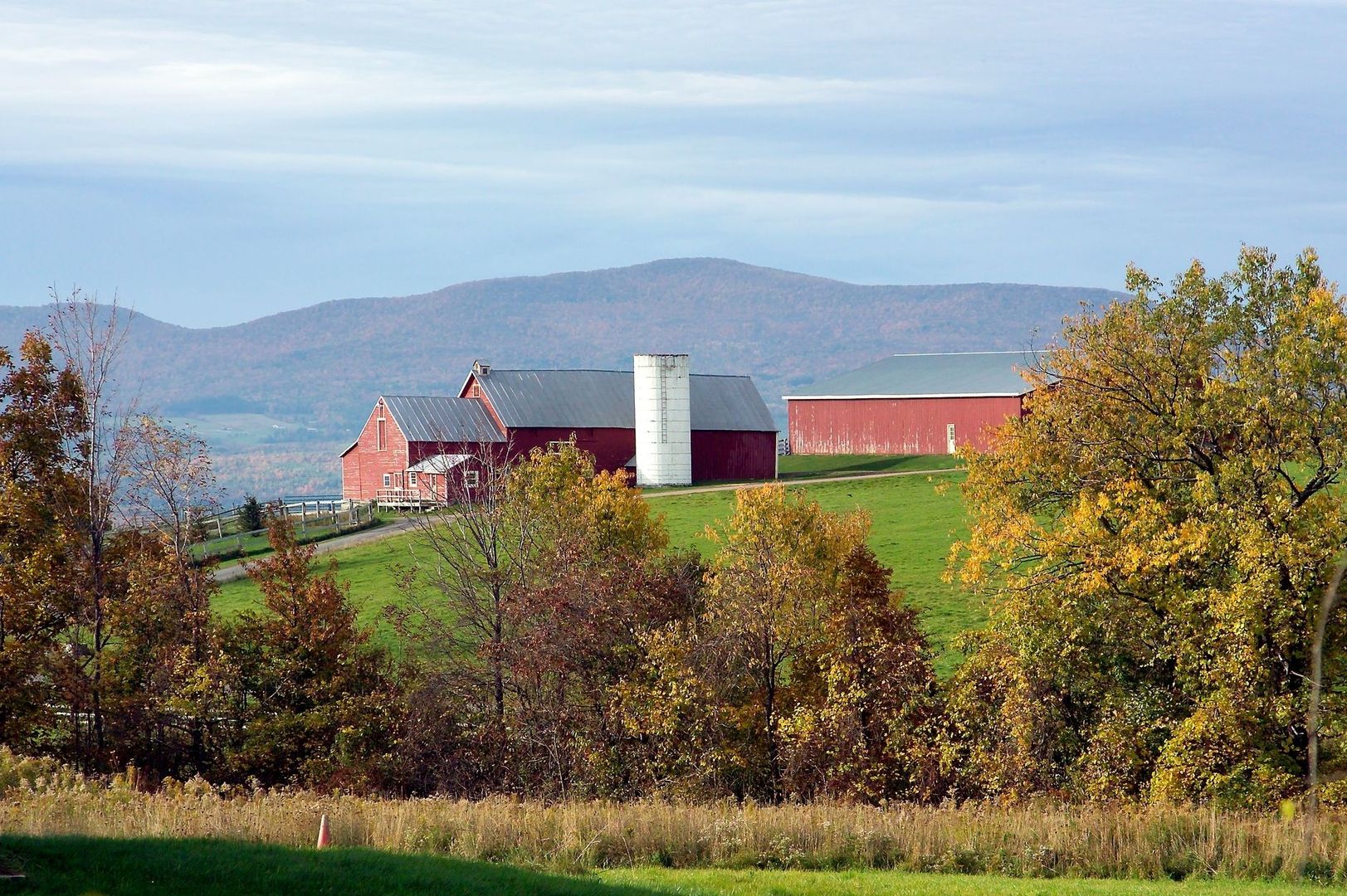
The shift from wilderness grandeur to cultivated landscape did not mean that nineteenth-century artists abandoned romanticism. Rather, romantic feeling moved into a more settled register. Frederic Church”s paintings and the carefully composed grounds of Olana demonstrate how art could connect geology, agriculture, architecture, weather, and spiritual reflection. As discussed in research on Church”s Olana, the estate was conceived as an active framework for seeing nature”s interconnections, not simply as a retreat from it.
This approach sits productively beside Leo Marx”s account of the American pastoral ideal. In The Machine in the Garden, Marx described a recurring tension between the countryside as refuge and the countryside as a place continually altered by settlement, technology, and economic ambition. The Hudson Valley often presented that tension through expansive views, monumental mountains, and the threat of industrial intrusion. The Finger Lakes made the same question more intimate. Here, roads, canals, farms, mills, vineyards, and villages were already embedded in the view, creating a landscape where human activity could appear as an extension of natural order, even while it quietly transformed the land.
Canal infrastructure and hillside vineyards added distinctive visual motifs. Water was both a natural feature and a working route, while cultivated slopes demonstrated patience, planning, and seasonal labor. A painting of a Finger Lakes shoreline could therefore hold several kinds of time at once: the ancient formation of the basin, the yearly rhythm of planting and harvest, and the rapid modernization represented by transportation networks. This combination produced an image of industrious peace, an environment where progress was measured not by towering factories but by the gradual flourishing of farms and communities.
| Hudson River School emphasis | Finger Lakes regional emphasis |
|---|---|
| Remote wilderness and monumental peaks | Settled valleys, deep lakes, and cultivated hillsides |
| Nature experienced as sublime spectacle | Nature experienced through work, residence, and community |
| National identity expressed through vast scenery | American identity expressed through local belonging |
| Threats suggested by industrial expansion | Infrastructure integrated into an evolving rural view |
John Dodgson Barrow and the Architecture of Skaneateles Lake
John Dodgson Barrow belongs to the generation of artists who recognized that a village street or familiar lakeshore could carry the same seriousness as a celebrated wilderness prospect. His paintings chronicled central New York villages, farmland, and still water with an attention that made ordinary places feel structurally significant. The word architecture is especially useful here. Barrow”s compositions organize shorelines, roads, trees, buildings, and distant hills so that the viewer understands how a community occupies its environment.
Barrow brought technical habits associated with the Hudson River School into domestic scenes. Careful recession, controlled atmosphere, and precise observation give his views clarity, but the purpose of that precision is not theatrical display. It is recognition. A quiet lake becomes a record of seasonal weather; a farm becomes evidence of labor; a village becomes a network of relationships. His landscapes ask viewers to notice the visual order created by human care without confusing order with complete control.
That regional attention helps explain why Barrow remains important to galleries and historical collections concerned with communal heritage. Information on John Dodgson Barrow places his work within the broader history of American art, while local exhibitions give that history a more immediate setting. Deeply enamored with his local surroundings, regional master John Dodgson Barrow documented the shifting balance between quiet shorelines and expanding agrarian village life.
- Look for the relationship between foreground activity and distant water.
- Notice how roads and buildings guide the eye through the composition.
- Consider which details suggest labor, residence, worship, trade, or transportation.
- Compare the painted atmosphere with the changing seasonal conditions of the Finger Lakes.
Andrew Joseph Russell and the Realistic Eye of Upstate New York
Andrew Joseph Russell offers a particularly revealing view of how technology changed regional landscape art without eliminating its romantic appeal. A painter and pioneering photographer, Russell was identified as the artist behind View of Bath, NY From the West, dated 1859, after examination revealed an inscription and unusual technical features. The work contained a striking degree of detail and perspective, along with dark foreground staining and wrinkling that suggested a photosensitive ground. These clues led researchers to consider whether Russell used photography as a basis for painting.
The Bath view is valuable because it combines the authority of a civic record with the atmosphere of a landscape picture. Seen from the west, the town becomes legible almost as a map. Its placement, surrounding terrain, and built features are not generalized into an imaginary pastoral scene. They are observed. At the same time, the painting does not become a dry diagram. Distance, light, and compositional balance preserve the emotional appeal associated with romantic landscape painting.
Russell”s related panorama, Cayuga Lake from Pumkin Hill, dated 1856, showed comparable technical characteristics and encouraged further research into his Finger Lakes travels. The evidence suggests that Russell may have photographed distant towns and painted over photographic images, possibly exhibiting these landscapes in the early 1860s. His later work documenting the Civil War and the construction of the Union Pacific Railroad demonstrates how adaptable this visual intelligence was. Photography offered new tools for accuracy, while painting continued to supply interpretation, mood, and a sense of regional identity.
The conservation history of these works also reinforces their importance. The Bath painting was restored in 2002, and the Aurora painting received conservation treatment in 2001. Such efforts do more than stabilize old surfaces. They preserve evidence of how nineteenth-century artists looked, experimented, traveled, and understood the changing landscape. Russell”s work shows that realism and romance were not opposites. In upstate New York, they could operate together, allowing a town to appear both precisely located and deeply meaningful.
Preserving the Agrarian Legacy in Upstate Cultural Institutions
Regional museums and historic sites now preserve this visual heritage within a broader account of upstate culture. Paintings of farms and lakes remain essential, but they are increasingly presented alongside work that addresses race, migration, technology, labor, gender, and changing ideas of belonging. This wider context matters because the pastoral image was never neutral. It reflected particular assumptions about who cultivated the land, who owned it, who was represented, and who remained outside the frame.
The Memorial Art Gallery in Rochester offers an instructive model. Its programming connects historical craft with contemporary artistic dialogue, as demonstrated when the gallery presented a John Rhoden retrospective alongside a dance collaboration by Garth Fagan Dance. The exhibition brought together sculpture in bronze, wood, and stone and used filmed movement to explore the relationship between stillness, gesture, and narrative. The gallery”s John Rhoden retrospective and dance collaboration show how an institution can honor technical mastery while inviting visitors to encounter sculpture through multiple forms of creative participation.
For visitors interested in nineteenth-century landscape art and sculpture across upstate New York, a rewarding itinerary can combine formal galleries with lived landscapes. The experience becomes richer when paintings are considered alongside the waterways, roads, villages, and working hillsides that informed them.
- Begin with regional collections that display paintings by local or nationally significant nineteenth-century artists.
- Visit historic landscapes such as Olana to study the connection between architecture, cultivation, views, and artistic philosophy.
- Explore Finger Lakes villages and shorelines slowly, comparing present-day development with the spatial arrangements preserved in historic images.
- Include sculpture exhibitions and contemporary programs that expand the meaning of regional cultural history.
- Support local arts associations, galleries, workshops, and artist opportunities that keep observation and making active within the community.
Institutions also serve as places where residents can question inherited images rather than simply admire them. A gallery label, conservation report, lecture, or hands-on workshop can reveal how a work was made and what it leaves unseen. That process connects the historical study of landscape with contemporary responsibility. The same lakes and valleys that inspired Barrow and Russell remain places of recreation, agriculture, housing, tourism, and environmental concern. Their meaning continues to be shaped by public conversation.
Step Out to Rediscover the Intimate Landscapes Around Us
The Finger Lakes painters demonstrated that American identity did not have to be located only in remote peaks or untouched wilderness. It could be found in the daily care of a hillside farm, the geometry of a village beside water, the quiet movement of a canal boat, or the shared view from a public road. Their paintings made cultivated landscapes worthy of sustained attention and showed that belonging can be expressed through the patient observation of familiar ground.
Modern visitors, artists, and residents can continue that tradition by approaching waterways, galleries, historic trails, and community exhibitions with active curiosity. A sketchbook, camera, or simply a slower walk can reveal how the landscape changes with weather, harvest, construction, and light. The enduring lesson is not that home is unchanging. It is that even quiet places contain layered histories, creative possibilities, and forms of beauty that become visible when people learn to look closely.
